Online shop on the Vantemo platform
Brillio
An educational toy shop moved from WooCommerce to Vantemo and rebuilt end to end: families choose toys by the child's age, while kindergartens and schools order against an invoice sent through SABIS.

- Year
- 2023–2026
- Role
- Migration, UX, design, build
- Duration
- Ongoing
- Industry
- Educational toys · families and schools

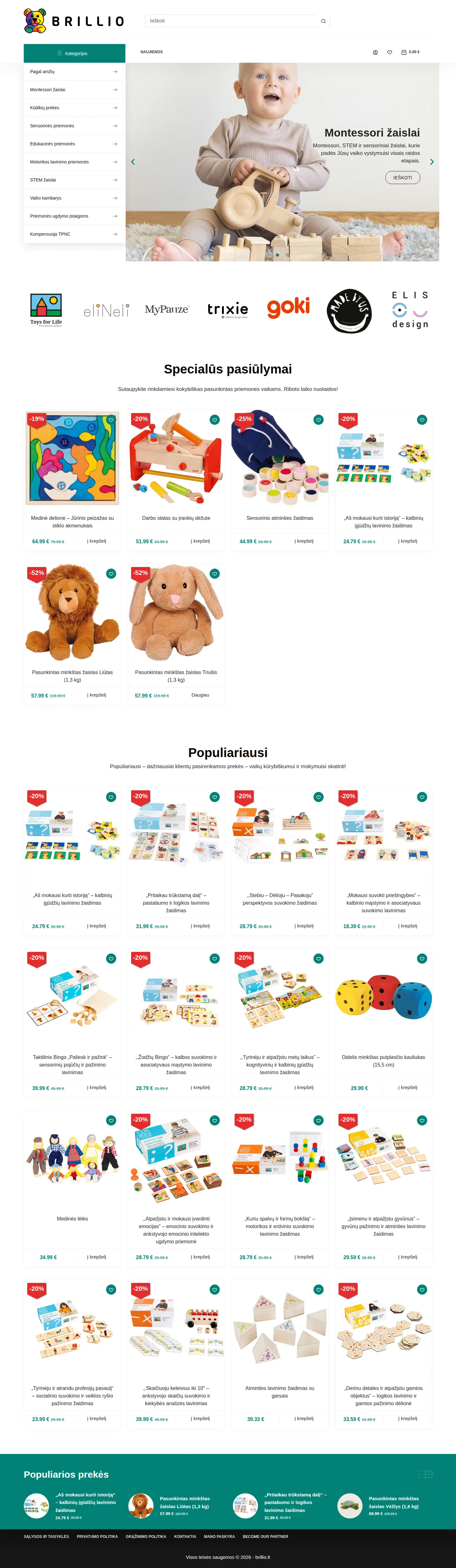
Hover over a preview to see the whole page.
Visit brillio.ltIn short
- Moved from WordPress and WooCommerce to Vantemo, our own e-commerce platform
- Two doors on the home page: a separate path for families and for schools, with one catalogue and shared stock
- Public institutions order without paying up front and get the invoice through SABIS; private ones pay by advance transfer
- Catalogue filters by category, price, brand and the child's age
- Payments by bank link and card, delivery to LP Express and Posti parcel lockers
- Old WooCommerce links redirect to the new shop; page titles and descriptions were written for search
The problem
Brillio sells to two very different buyers: parents looking for a toy for a child of a given age, and kindergartens and schools buying teaching materials. The old shop ran on WordPress and WooCommerce* with Elementor and showed both the same thing – a long list of categories and a standard checkout that takes payment up front. A public institution cannot buy that way: it needs an invoice through SABIS* and pays by bank transfer.
The solution
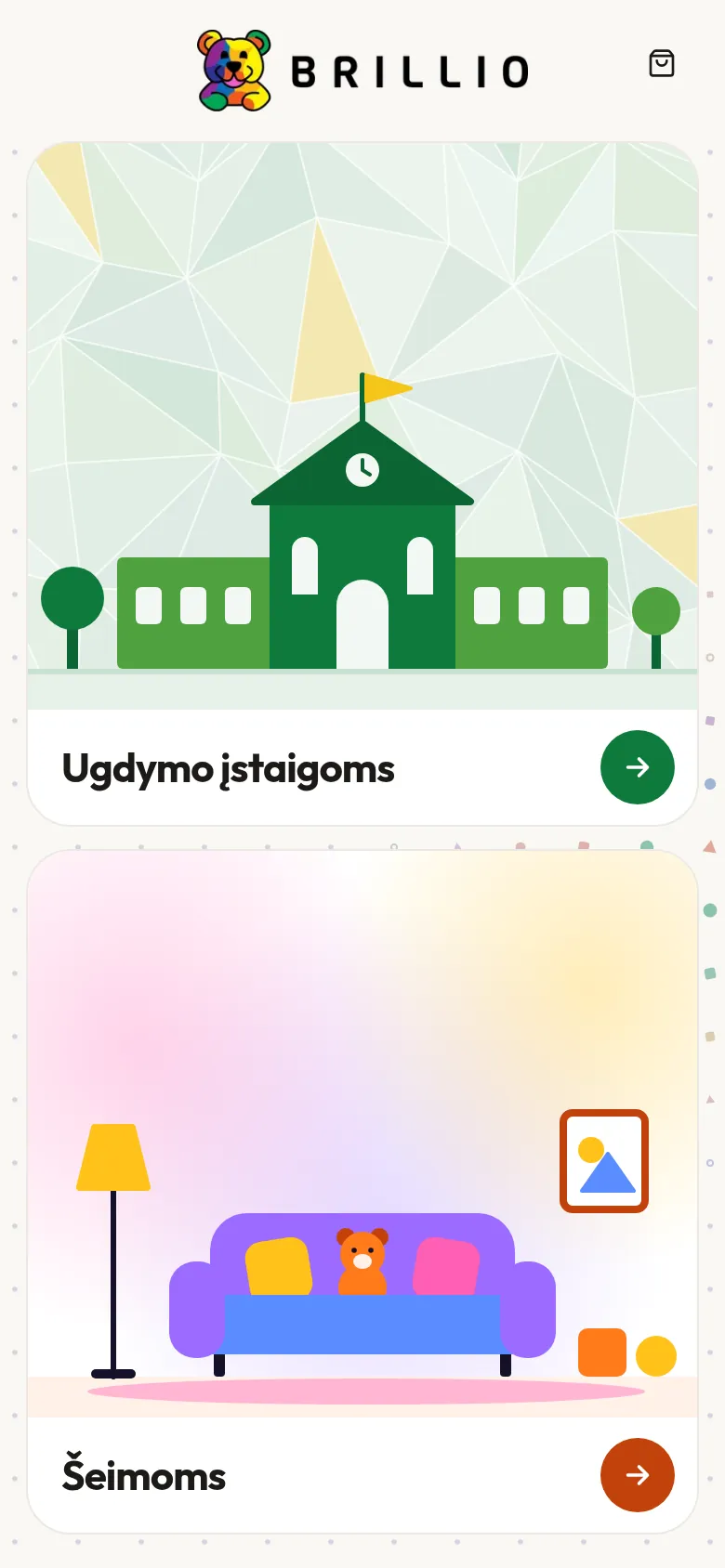
We moved the shop to Vantemo – our own e-commerce platform – and rebuilt the purchase path. On the home page, visitors choose which door to go through: “For schools” or “For families”. Behind both sit the same catalogue and the same stock, but a different product selection, copy and payment options. Products came across from a WooCommerce* export, the categories were reorganised, and old links now redirect to the new shop.
The result
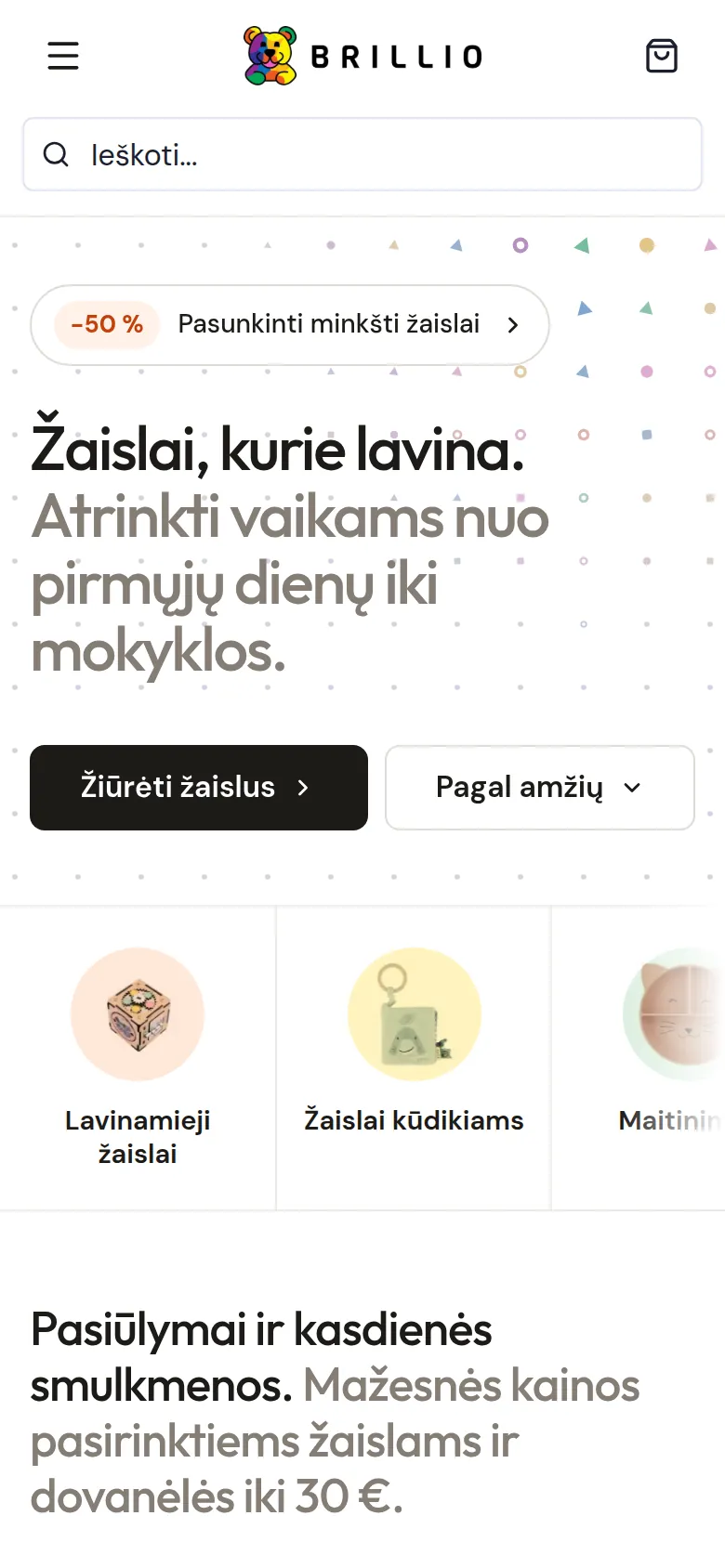
Since October 2026, brillio.lt has run on Vantemo: 447 products and a catalogue filtered by category, price, brand and age. Families pay by bank link or card, while public institutions place an order without paying and receive the invoice through SABIS*. We are not publishing sales figures yet – the shop has only just moved to the new platform.
How it was built
Two buyers, two doors
Parents want to find the right toy quickly and pay easily. A kindergarten cares about other things: whether the item suits a group, whether there will be an invoice, and whether it can avoid paying by card. So the home page has no banners and no category list – just two cards. Each leads to its own side of the shop, with a product selection and copy made for it, while products, prices and stock stay shared, so nothing has to be maintained in two places.
For schools: order now, invoice through SABIS
An institution fills the cart as in any shop and, at checkout, chooses to pay as an educational institution. It finds itself by name or company code, and the address and details fill in automatically. A public institution places the order without paying, receives the invoice in its SABIS account and pays by bank transfer. A private institution, or one without SABIS, chooses an advance transfer. The page also has a four-step walkthrough, the best-selling items and answers to common questions.
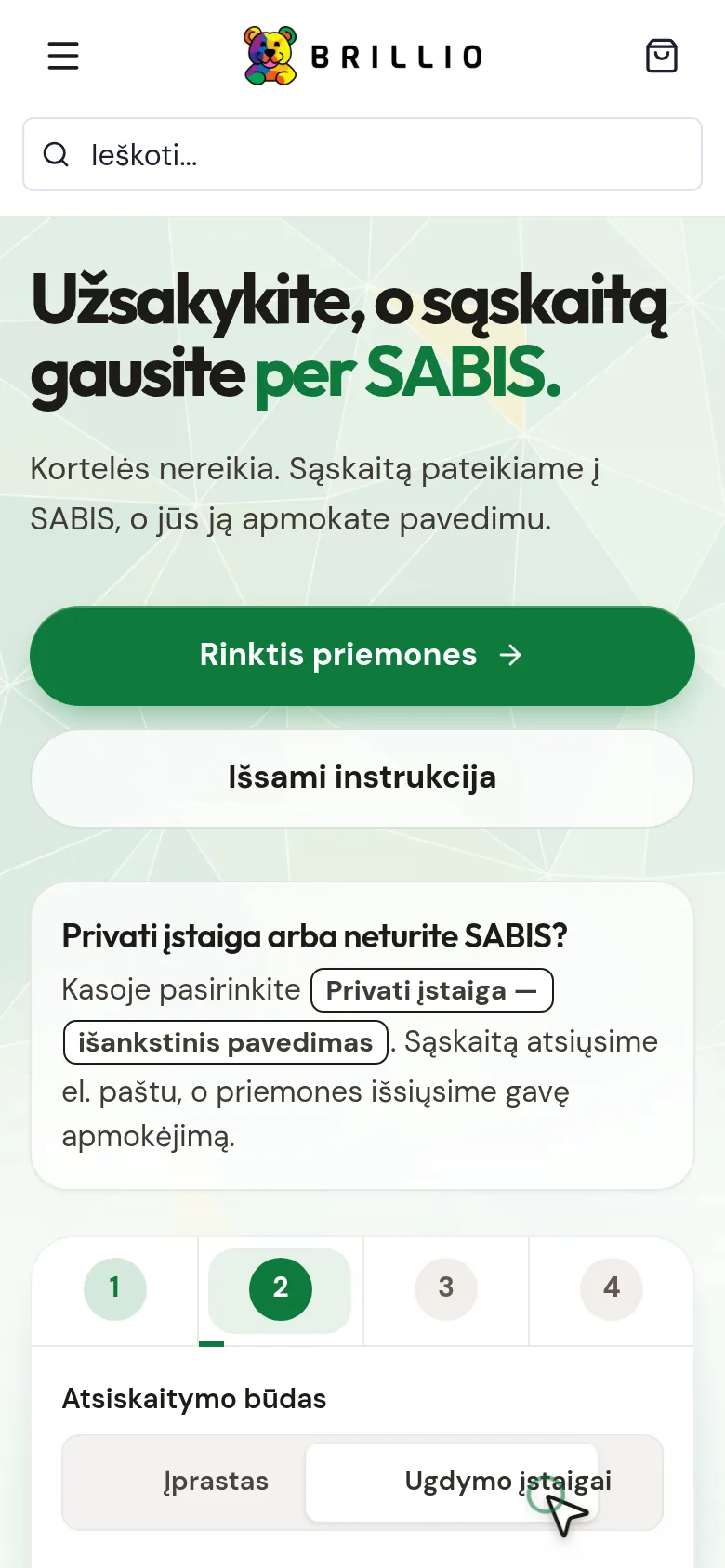
For families: by the child's age
Parents often search by the child's age, so the families page groups toys into four age bands: under 1, 1–3, 3–6 and 6+. Gifts under €30, new arrivals and gift cards sit on the same page. Delivery prices are shown up front, along with how much is left until free delivery from €49.
A catalogue that is easy to search
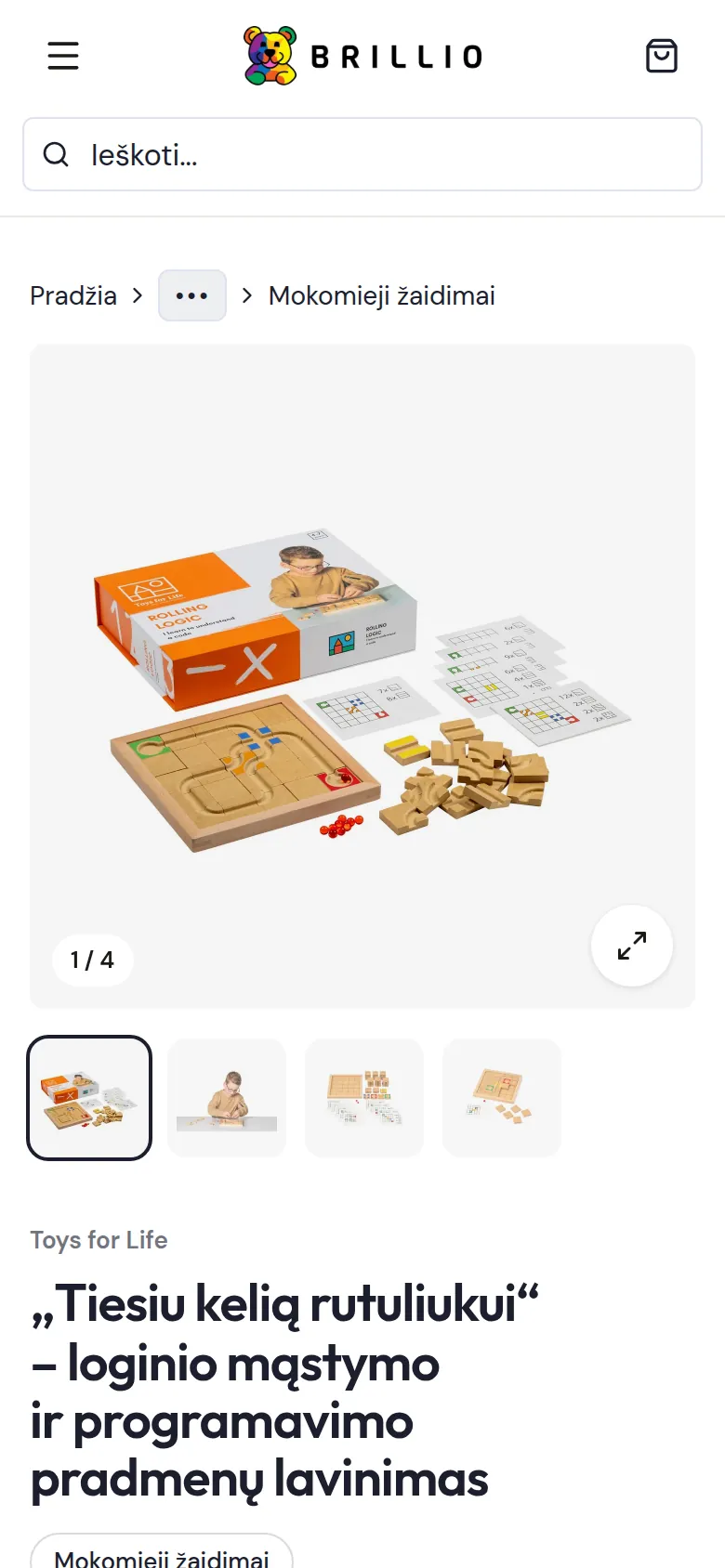
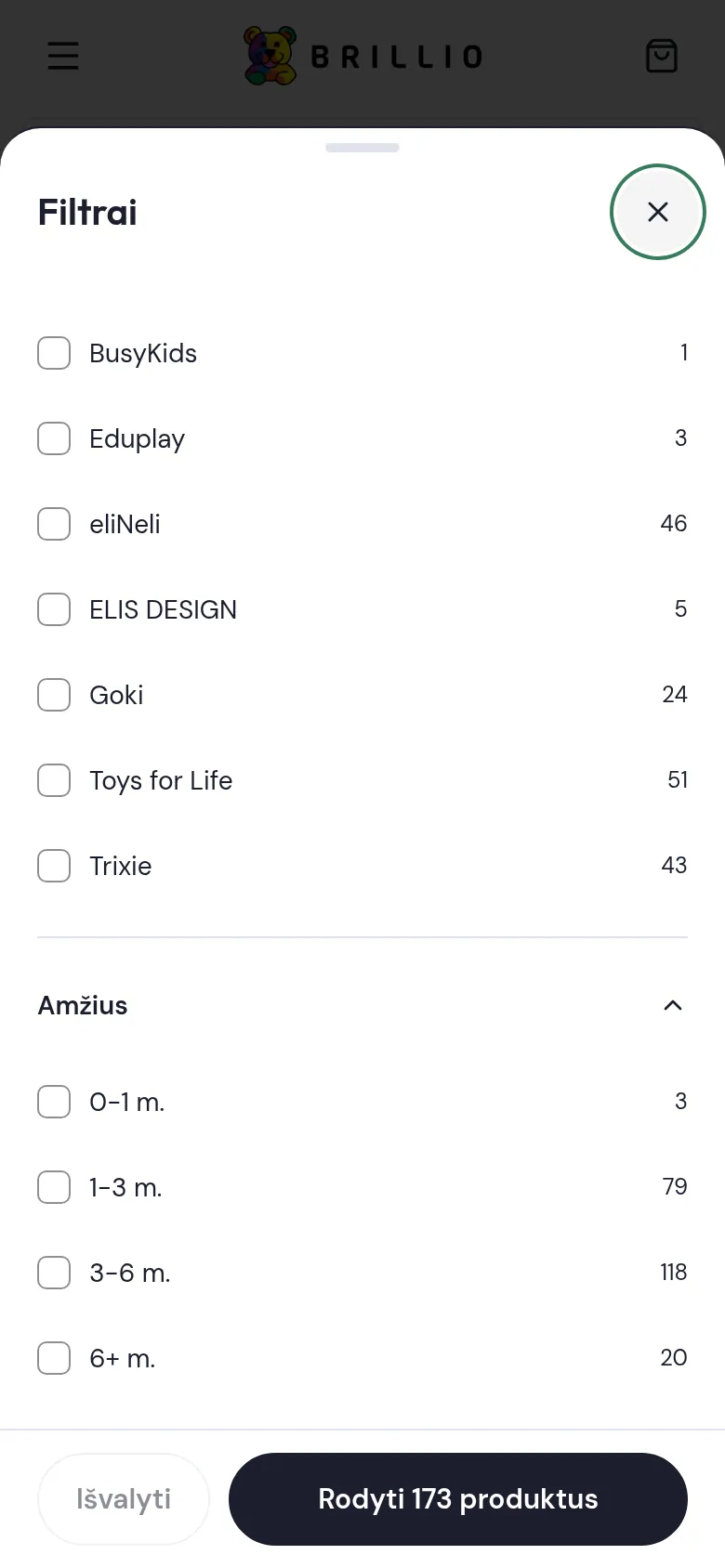
Category pages filter by subcategory, price, brand and age, and each option shows how many products match it. On a phone, the filters open in a panel from the bottom of the screen. Many of the learning games say in their name which skill they build, and each product page lists the key benefits, how to play, stock and delivery time. Parents and teachers can tell faster whether an item fits.
Moving without losing search
The old shop's pages were in Google search, so old links must not end on an error page. The terms, privacy, cart, account and blog pages redirect to their new counterparts, and old product and category links go to the new catalogue. Page titles and descriptions were rewritten, product pages carry structured data*, and categories and brands have their own sitemaps.
Four ways to pay in one checkout
A family, a public kindergarten and a private school all pay differently. They share the same cart, and at checkout the buyer picks how to pay.
Bank link
MakeCommerce
- The buyer approves the payment in their own bank
- No card details to enter
Card and wallets
Stripe
- Payment cards
- Digital wallets on the phone
Public institution
SABIS e-invoice
- The order is placed without paying up front
- The invoice arrives in the institution's SABIS account and is paid by transfer
Private institution
Advance transfer
- The invoice is sent by e-mail
- Items ship once payment arrives
Delivery to LP Express and Posti parcel lockers or by courier, free from €49.
Architecture
Brillio runs on Vantemo and uses the same core as the platform's other shops: catalogue, orders, payments and e-mail. What is unique to Brillio – the two doors, the families and schools pages, ordering through SABIS – is built as this shop's own components while the core stays shared, so platform improvements reach Brillio automatically.
- Platform
- Vantemo (multi-shop platform)
- Front-end
- Next.js · React
- DB
- PostgreSQL
- Payments
- MakeCommerce · Stripe
- Institutions
- SABIS e-invoices · advance transfer
- Delivery
- LP Express · Posti · courier
- Analytics
- GA4 with Consent Mode
- Infrastructure
- Cloudflare
- Vantemo
- Next.js
- React
- PostgreSQL
- MakeCommerce
- Stripe
- SABIS
- LP Express
- Posti
- GA4
- Cloudflare
SEO and analytics
Pages are rendered on the server with titles and descriptions written for search. Product pages carry Product and Breadcrumb structured data, and categories and brands have their own sitemaps. Traffic is measured with GA4 under Google's Consent Mode, so data is collected only as far as the visitor allowed.
What had to be solved
Two audiences without two shops
A separate shop for institutions would mean maintaining the catalogue, prices and stock twice. One catalogue with two sides lets each audience see its own selection and copy, while each product is managed in one place.
Payment for public institutions
A public institution cannot pay by card up front. At checkout it places the order without paying, and the invoice goes to SABIS – where the institution already approves its supplier invoices.
Moving off WooCommerce
Products came across from a WooCommerce export, and old links were permanently redirected so that neither search nor old links lead to an error page.
The catalogue on a phone
More than four hundred products easily become an endless list on a phone. Filters with a product count next to each option and clear age bands narrow the list in a few taps.
Need a website like this?
Tell us what you have in mind. We read every inquiry ourselves.
Discuss a project